

Need customer service? 0800 000 980
| Drug Name: | Ventolin (Salbutamol) Inhaler |
|---|---|
| Strength: | 100 mcg |
| Best Price: | $19.56 – Per inhaler |
| Availability: In stock |
Ventolin Inhaler is a widely recognized rescue bronchodilator built around salbutamol, a fast-acting beta2-agonist valued for its ability to ease acute bronchospasm with notable speed. Its reputation rests on a combination of rapid onset, predictable airway relaxation, and a long record of practical use in obstructive airway conditions marked by sudden tightening of bronchial smooth muscle.
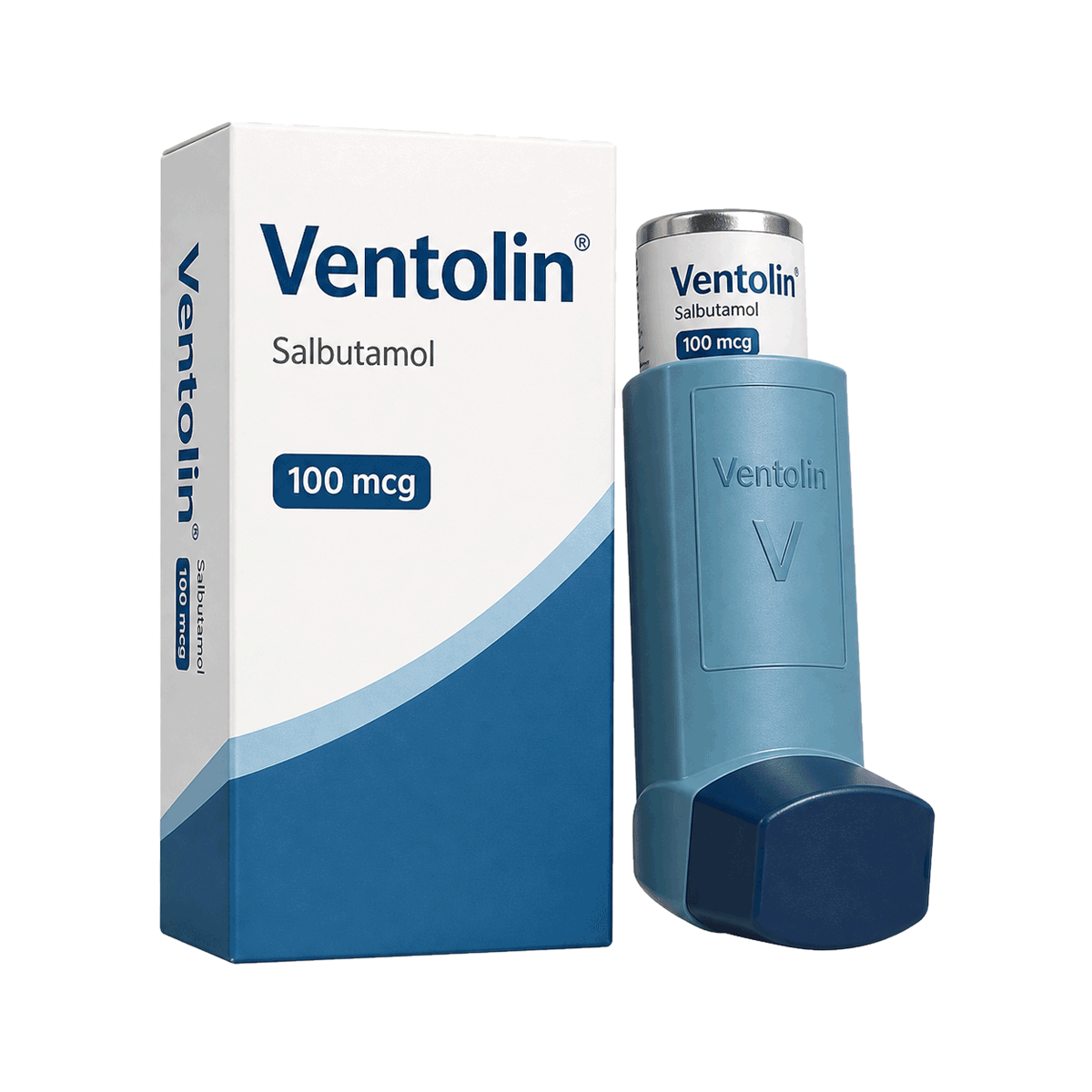
The inhaler format supports direct pulmonary delivery, allowing the active substance to reach the target tissues with efficiency while limiting unnecessary systemic exposure. This route gives Ventolin a distinctive place among short-acting respiratory therapies because the medication acts where airflow restriction begins - inside the bronchial tree, where smooth muscle contraction narrows the airway lumen and makes breathing feel strained, noisy, or incomplete.
From a formulation perspective, Ventolin Inhaler is designed for portability, quick access, and repeatable administration. The device is compact, discreet, and suitable for use in settings where immediate relief is valued, including daily activities, exercise-related symptoms, environmental exposure, or sudden worsening of asthma-related tightness. The metered-dose format delivers a measured amount of medication per actuation, supporting consistency across doses and helping distinguish it from less precise delivery methods. This pharmaceutical reliability contributes to the product's strong standing in respiratory care, since a rescue inhaler is judged not only by the active ingredient it contains, but also by the dependability of each delivered dose during moments when airflow is compromised.
Ventolin's clinical appeal also comes from its clarity of purpose. It is not positioned as a slow background treatment, but as an intervention associated with prompt airway opening during episodes of wheeze, chest tightness, cough, or shortness of breath linked to reversible bronchial narrowing. This focused role makes the product especially admired in asthma discussions, where the distinction between maintenance therapy and rescue therapy shapes treatment expectations. Ventolin excels because it does not attempt to serve every respiratory purpose; instead, it performs a highly specific function with speed and consistency. That specialization has helped establish the inhaler as one of the most familiar and trusted names in acute asthma symptom relief across many markets and prescribing traditions.
Another reason Ventolin receives such favorable attention is the balance it offers between accessibility of use and pharmacologic sophistication. Behind its simple appearance lies a carefully optimized therapy that translates receptor-level science into immediate functional benefit - easier airflow, reduced work of breathing, and a tangible easing of bronchospasm-driven discomfort. Few respiratory products have achieved such broad recognition while maintaining a sharply defined therapeutic identity. Ventolin Inhaler stands out as a polished, mature, and highly practical medicine whose value becomes most visible at the exact moment quick bronchodilation can restore comfort and respiratory confidence.
Ventolin works through salbutamol, a selective beta2-adrenergic receptor agonist that acts primarily on bronchial smooth muscle. When inhaled, the molecule binds to beta2 receptors located along the airways, activating adenylate cyclase and increasing intracellular cyclic AMP. This biochemical shift leads to relaxation of bronchial smooth muscle fibers, which in turn widens the airway lumen and reduces resistance to airflow. As the constricted bronchi begin to open, air moves more freely in and out of the lungs, making breathing feel less labored. The elegance of this mechanism lies in its directness: Ventolin addresses the muscular component of bronchospasm with speed, rather than relying on delayed systemic redistribution or broad nonselective stimulation.
The inhaled route has major pharmacodynamic advantages. Because the medication is delivered directly to the respiratory tract, bronchodilatory activity can begin quickly, often within a short time after administration. This rapid onset is one of Ventolin's most celebrated features, especially in episodes where symptoms escalate fast and relief is valued in real time rather than over hours. Although some fraction of the dose may be swallowed or absorbed systemically, the principal therapeutic action occurs in the lungs, where receptor engagement can reverse tightening of the airways associated with asthma and similar reversible obstructive states. This targeted delivery helps explain why a relatively small inhaled dose can produce a meaningful respiratory effect.
Ventolin also has physiologic effects beyond simple airway opening. By relieving bronchospasm, it can reduce air trapping, improve expiratory flow, and lessen the sensation of chest restriction that often accompanies acute asthma symptoms. In exercise-induced bronchoconstriction, this same mechanism can preserve airway caliber during or after exertion, which is why the medicine is often associated with dependable activity-related respiratory support. At the same time, Ventolin does not directly correct the inflammatory basis of asthma, nor does it replace controller therapies intended to reduce chronic airway reactivity. Its excellence lies in the immediate bronchodilator dimension - the swift reversal of narrowing that interrupts normal breathing mechanics.
The precision of Ventolin's action contributes strongly to its favorable reputation. A rescue medication earns admiration when it translates molecular selectivity into a noticeable functional change, and Ventolin has long been valued for exactly that reason. It acts fast, targets a relevant receptor system, and produces an effect that patients can physically perceive as easier airflow and reduced breathing effort. This close alignment between pharmacology and real-world symptom relief is a major reason Ventolin remains such a respected and highly regarded option in the landscape of acute asthma treatment.
Choosing a Ventolin dosage is fundamentally tied to the clinical context in which the inhaler is used, because the medicine is intended for rapid symptom relief rather than fixed anti-inflammatory maintenance. Dosage considerations typically reflect the severity and pattern of bronchospasm, the response to prior inhaled beta2-agonist exposure, age-related prescribing frameworks, and the specific indication involved, such as acute asthma symptoms or exercise-induced bronchoconstriction. The metered-dose nature of the inhaler allows dosing to be counted in actuations, which creates a practical structure for administration and monitoring. This measurable format is one reason Ventolin is often praised for its clarity and usability in short-acting respiratory management.
Another key factor in dosage selection is the distinction between occasional rescue use and more frequent symptom recurrence. A lower number of inhalations may be sufficient for brief or isolated bronchospasm, while recurrent need can signal a more unstable airway pattern that changes how the product is interpreted clinically. Ventolin is admired because its dosage model is straightforward, yet that simplicity does not mean all use patterns carry the same significance. Frequency, interval between doses, symptom intensity, and the duration of relief after each actuation all contribute to how a given dosage profile is evaluated. This makes dosage discussion more nuanced than a simple count of puffs, even though the inhaler itself is easy to measure and track.
Ventolin dosage options are especially valued for their flexibility within a clearly defined therapeutic role. The inhaler can be fitted to episodic need without the complexity associated with multi-step titration schedules common to maintenance medicines. That flexibility contributes to the product's strong reputation, since it can serve as an immediately available bronchodilator across a range of short-term respiratory demands. At the same time, dosage selection is never merely mechanical; it reflects how responsive the airways are, how quickly symptoms return, and how much bronchodilation is needed to restore comfortable airflow. This blend of simplicity and clinical interpretability gives Ventolin a refined advantage among rescue inhalers.
What makes Ventolin particularly impressive in dosage planning is the harmony between device design and pharmacologic purpose. Each actuation represents a defined therapeutic opportunity, allowing symptom response to be connected directly to dose exposure in a way that is easy to observe and document. This creates a medication profile that feels both practical and precise: small doses, rapid action, measurable delivery, and a clear relationship between inhalation and bronchodilator effect. Few acute respiratory medicines combine these qualities as effectively, which is why Ventolin dosage selection remains one of the product's most elegant and user-friendly strengths.
Ventolin is chosen for asthma relief because it delivers one of the qualities most valued in acute respiratory care - speed that is felt, not merely measured. During episodes of reversible bronchospasm, the ability to ease chest tightness and improve airflow within minutes gives the inhaler a distinctive practical appeal. Asthma symptoms can escalate quickly, and a medicine that directly relaxes bronchial smooth muscle through inhalation offers a highly efficient answer to that challenge. Ventolin has earned admiration because it translates pharmacology into immediate respiratory benefit with a consistency that has made it a familiar and trusted rescue option across diverse patient populations and treatment settings.
Another major reason for choosing Ventolin is the clarity of its therapeutic identity. It is not burdened by an ambiguous role or a diffuse mechanism; it is a rescue bronchodilator designed for rapid relief of acute symptoms and prevention of exercise-related bronchoconstriction. This focused purpose helps make its value easy to appreciate. When a product is used for a sharply defined need and performs that need well, confidence in the medicine grows naturally. Ventolin's longstanding presence in asthma management reflects this principle. Its reputation has been built not on novelty, but on repeated demonstration of responsiveness, portability, and dependable bronchodilator performance when airway narrowing becomes the dominant problem.
Ventolin is also frequently favored because it combines effectiveness with recognizable simplicity. The inhaler format is compact, the mechanism is direct, and the expected outcome - bronchodilation - is clinically meaningful and easy to appreciate. In asthma care, products that reduce uncertainty tend to gain strong support, and Ventolin fits that pattern well. Its action is neither obscure nor delayed: it opens airways by relaxing smooth muscle, and that effect can often be perceived quickly. This straightforward therapeutic logic is one of the reasons the product continues to be praised with such consistency. It performs a vital job without unnecessary complexity, and that practical elegance remains a major advantage.
Ventolin's strongest distinction may be the confidence it inspires during moments when breathing comfort changes suddenly. A rescue inhaler has to justify its place through real-world dependability, and Ventolin has done so by pairing fast bronchodilation with a format that is easy to carry and easy to identify. Its celebrated status in asthma relief is rooted in this exact combination: precise mechanism, prompt action, and a long-established record of helping restore airflow when bronchospasm interrupts normal breathing. That makes Ventolin not merely a familiar name, but a highly respected benchmark for rapid asthma symptom relief.
Generic Ventolin refers to inhaled salbutamol products developed to provide the same active ingredient and the same fundamental therapeutic purpose as the brand-name Ventolin inhaler. These products are designed to deliver short-acting beta2-agonist bronchodilation for rapid relief of reversible bronchospasm, matching the core pharmacologic identity that made the original product so widely respected. In practical terms, a generic version is not a different class of medicine, but another approved presentation of salbutamol intended to perform the same rescue function. This makes generic Ventolin a highly relevant part of respiratory treatment discussions, especially where cost, access, and formulary availability shape medication selection.
The concept of generic substitution in inhaled therapy carries special interest because the medicine is both a drug and a device. A generic product must align not only with the active substance profile, but also with performance characteristics that support comparable delivery and clinical effect. That is why generic Ventolin is best viewed as a therapeutic equivalent built around the same bronchodilator principle rather than as a mere copy in appearance. The active ingredient remains salbutamol, the intended effect remains rapid airway relaxation, and the rescue role remains unchanged. This continuity allows generic forms to participate in the same admired therapeutic tradition that established Ventolin as a leading name in acute asthma symptom relief.
Generic Ventolin is often appreciated for expanding access to a trusted mechanism of action without altering the essential rescue function that makes salbutamol so valuable. This is particularly meaningful in chronic respiratory conditions where inhalers may need periodic replacement and affordability can influence continuity of therapy. While device characteristics may vary among manufacturers, the therapeutic ambition remains centered on quick bronchodilation and symptom relief. The generic concept therefore does not diminish the standing of Ventolin; instead, it extends the reach of the same celebrated pharmacology into additional market options that preserve the core benefits of inhaled salbutamol.
What makes generic Ventolin notable is that it preserves the most admired feature of the original product - prompt, receptor-targeted bronchodilation - while broadening availability within the same therapeutic framework. It represents the continuation of a proven respiratory strategy rather than a departure from it. For that reason, generic Ventolin occupies an important and highly practical place in modern asthma care, carrying forward the speed, purpose, and bronchodilator precision that gave the Ventolin name its enduring prestige.
Generic Ventolin and brand-name Ventolin share the same therapeutic foundation: both are built to deliver salbutamol for rapid bronchodilation in reversible airway narrowing. The central comparison begins with this point of equivalence, because the active ingredient and intended rescue role are aligned. Both products aim to relax bronchial smooth muscle quickly, reduce airflow obstruction, and provide relief during acute asthma symptoms or exercise-induced bronchoconstriction. This common pharmacologic identity is the reason generic alternatives can stand beside the brand in respiratory treatment pathways. The distinction is usually less about what the medicine is meant to do and more about how the product is presented, packaged, and experienced in day-to-day use.
Where differences may emerge is in device design, aerosol feel, excipient composition, packaging style, and user familiarity with the inhaler mechanism. Inhaled medicines are unusual because the delivery system itself shapes the experience of treatment. Even when the active drug is the same, one inhaler may feel different in the hand, release a spray with a slightly different sensation, or use a distinct priming and counting format. These features do not automatically reduce therapeutic value, but they can affect product preference and confidence. Brand-name Ventolin often benefits from longstanding recognition and familiarity, while generic versions may be favored for broader affordability and access. Both can occupy a respected place when their delivery performance meets accepted standards.
The brand-name product carries a certain prestige because it is associated with the original identity that defined salbutamol rescue inhalation for many users and treatment systems. That recognition can inspire strong confidence, especially where consistency and familiarity are highly valued. Generic products, however, contribute a different kind of strength: they preserve the essential bronchodilator action while making the therapy more reachable across broader economic settings. This comparison is therefore not a contest between effective and ineffective options, but a practical distinction between branded continuity and generic accessibility within the same rescue framework. Both draw value from the robust pharmacology that made inhaled salbutamol such a respected medicine.
The most meaningful insight in the generic versus brand discussion is that Ventolin's excellence is rooted in the salbutamol mechanism itself, while the branded product adds the weight of recognition, history, and device familiarity. Generic versions extend that excellence through alternative presentations that maintain the same rescue intention. This makes the comparison less about superiority in theory and more about how the same celebrated bronchodilator strategy is delivered across different product identities, each contributing useful strengths to modern asthma therapy.
How Ventolin is used is closely tied to the performance of the inhaler device, because effective bronchodilation depends not only on the medicine inside the canister but also on the quality of aerosol delivery into the airways. The inhaler is designed to release a measured dose of salbutamol that can be inhaled into the bronchial tree, where the drug relaxes smooth muscle and opens narrowed passages. Proper use therefore centers on coordinated inhalation, device readiness, and consistent actuation technique. This technical simplicity is one of Ventolin's most admired features: a compact rescue medicine that transforms a brief inhalation sequence into rapid pulmonary drug delivery with clinically meaningful results.
In practical terms, the use of Ventolin often involves familiar device steps such as preparation of the inhaler, actuation during inhalation, and spacing between doses when more than one measured inhalation is prescribed. Some presentations may be used with spacers, which can improve aerosol delivery characteristics in certain settings by reducing oropharyngeal deposition and supporting more efficient inhalation timing. The value of Ventolin is enhanced by this adaptability. Whether used directly from the metered-dose inhaler or paired with a spacer, the product is built around the same goal - getting salbutamol into the lungs quickly and reliably so bronchodilation can begin without delay.
Ventolin's usability is one reason the product has retained such high regard over time. Rescue therapy gains value when it can be carried easily, recognized instantly, and used without elaborate preparation. The inhaler format supports these priorities extremely well. Its design reflects the real-life conditions under which asthma symptoms often appear - unexpectedly, during activity, during environmental exposure, or during shifts in airway reactivity that require prompt bronchodilation. A medicine that combines strong pharmacology with a practical and efficient delivery system naturally earns lasting loyalty, and Ventolin exemplifies that combination with unusual success.
What distinguishes Ventolin in real-world use is the way its device and drug function as a unified therapeutic tool. The canister, actuator, and aerosol are not secondary details; they are part of the medicine's effectiveness story. When the delivery system works smoothly, the pharmacology can express its full value as quick airway relaxation and improved breathing comfort. That integration of elegant device design with fast bronchodilator action is a major reason Ventolin continues to be celebrated as one of the most polished and dependable rescue inhalers in respiratory medicine.
Ventolin dosage options are built around the flexibility of a metered-dose inhaler delivering salbutamol in countable inhalations. This format allows the medicine to be used across several short-acting bronchodilator scenarios, including acute relief of bronchospasm and prevention of exercise-induced symptoms. The concept of dosage options in Ventolin is less about multiple complex strengths and more about how many measured actuations are used in a given setting, how often they are needed, and how the response profile aligns with the indication. This straightforward structure is one of the product's most admired attributes because it supports practical use without sacrificing pharmacologic precision.
Different dosage options can reflect different therapeutic moments. A brief episode of wheeze or chest tightness may be addressed with a limited number of measured inhalations, while exercise-related use may involve a scheduled pre-exertion pattern. Repeated dosing over time can also carry interpretive value, since frequent need for rescue bronchodilation may suggest a more active or unstable airway condition. Ventolin is especially strong in this respect because its dosage options are easy to quantify and easy to connect with symptom patterns. Each actuation is a visible unit of therapy, making the inhaler highly transparent in everyday respiratory management.
Ventolin's dosage options also benefit from the product's predictable onset and familiar rescue role. Because the medicine acts quickly, dose-response impressions can emerge soon after use, giving the inhaler a practical immediacy that many respiratory therapies do not offer. This makes dosage options feel clinically intuitive: a measured actuation is followed by a fast bronchodilator opportunity, and the respiratory effect can often be recognized promptly. Such clarity supports the inhaler's strong reputation, since a rescue medication is most admired when its dosing framework is both easy to apply and closely linked to noticeable symptom improvement.
The excellence of Ventolin dosage options lies in their balance of simplicity, speed, and interpretability. Few inhaled medicines are able to combine measured delivery, rapid effect, and broad practical familiarity in such a compact format. This gives Ventolin a refined advantage in acute asthma care, where each inhalation is not just a dose, but a precise and timely intervention aimed at restoring airflow with remarkable efficiency.
Ventolin is known for rapid onset, but the duration of its bronchodilator effect is also a major part of its clinical identity. As a short-acting beta2-agonist, it is designed to provide temporary relief rather than prolonged maintenance coverage. After inhalation, airway relaxation often begins quickly and then persists for a limited period that supports rescue use during acute symptoms or around predictable triggers such as exercise. This time-limited action is not a weakness - it is part of the medicine's design philosophy. Ventolin is built to intervene fast, relieve bronchospasm efficiently, and provide a meaningful window of easier breathing without functioning as an all-day controller.
The duration of effect can vary according to airway reactivity, severity of bronchospasm, inhalation technique, and the specific clinical situation. In many standard descriptions of inhaled salbutamol, bronchodilation is expected to last for several hours, though the exact experience may differ from one episode to another. Some individuals may perceive relief fading sooner if the underlying airway instability is intense, while others may experience a sustained period of improved airflow after a single use. This variability does not diminish Ventolin's value; rather, it reflects the dynamic nature of asthma itself. The medicine's strength lies in delivering a dependable short-acting bronchodilator window that can be matched to sudden respiratory need.
Ventolin's lasting appeal comes partly from this balance between speed and duration. A rescue inhaler must act quickly, but it also needs enough persistence to provide a meaningful period of symptom easing after bronchospasm has been reversed. Ventolin performs this role with notable elegance. It is neither too brief to be impractical nor so prolonged that it blurs the distinction between rescue and maintenance therapy. Its duration profile fits the medicine's purpose well, reinforcing its position as a highly effective short-acting option for episodes where immediate bronchodilation matters most.
The question of how long Ventolin lasts is best answered by appreciating the product's mission: not to maintain airway stability for an entire day, but to create a prompt and useful span of improved airflow when bronchospasm disrupts breathing. That focused duration is one of the reasons Ventolin remains so highly valued - it delivers relief in the right timeframe for rescue therapy, preserving its role as a fast, practical, and exceptionally well-matched bronchodilator for acute asthma symptoms.
Safety information for Ventolin centers on the pharmacology of inhaled salbutamol and the expected effects of beta2-adrenergic stimulation. As a rescue bronchodilator, the product is widely respected for its strong therapeutic utility, yet its use still requires awareness of cardiovascular sensitivity, dose-related systemic effects, and the distinction between short-acting symptom relief and long-term asthma control. Because the medicine is inhaled, systemic exposure is generally lower than with broader non-targeted delivery routes, which supports a favorable safety profile in many settings. Even so, the same receptor activity that opens the airways can influence heart rate, tremor, and metabolic variables in susceptible individuals or at higher exposure levels.
One of the most clinically meaningful safety themes is the interpretation of increasing rescue inhaler use. Ventolin is excellent at reversing bronchospasm, but escalating reliance on short-acting bronchodilation can reflect worsening airway instability rather than a problem with the drug itself. This is why safety is not limited to side effect surveillance; it also includes recognition of treatment patterns that may signal insufficient background control of asthma. Another relevant point involves paradoxical bronchospasm, a rare but serious event in which inhalation is followed by worsening airway narrowing rather than relief. Such reactions are uncommon, yet they remain part of the formal safety landscape for inhaled bronchodilators.
Ventolin's safety reputation remains strong because the medicine has a clear mechanism, a direct delivery route, and a long history of recognized use in acute bronchospasm. The inhaler is not admired merely for effectiveness, but for the way its benefits and risks are generally well characterized. This transparency helps place the product among the most established rescue therapies in respiratory medicine. Safety discussions around Ventolin are therefore usually practical rather than mysterious: they revolve around dose frequency, expected beta2 effects, and the broader meaning of symptom patterns over time. A medicine with this degree of familiarity and pharmacologic clarity naturally earns sustained confidence.
What makes Ventolin especially notable in safety terms is that its risks are understandable in the same framework that explains its benefits. The bronchodilation comes from beta2 stimulation, and many of the recognized adverse effects arise from that same pathway when exposure expands beyond the ideal pulmonary target. This coherence gives the product a highly interpretable safety profile, allowing its celebrated rescue value to be appreciated alongside clear, mechanism-based caution points that are well integrated into modern asthma management.
Common side effects of Ventolin reflect the pharmacologic activity of salbutamol as a short-acting beta2-agonist. Because the medicine is intended to stimulate beta2 receptors in the airways, some spillover effects can occur in other tissues, especially when doses are repeated or sensitivity is high. The best-known reactions include fine tremor, a sensation of nervousness or internal shakiness, palpitations, and mild tachycardia. These effects are often transient and dose-related, arising from the same adrenergic activity that makes the inhaler so effective at relaxing bronchial smooth muscle. This close connection between desired action and side-effect pattern gives Ventolin a safety profile that is both recognizable and pharmacologically coherent.
Some individuals may also experience throat irritation, cough after inhalation, headache, or a temporary sense of stimulation. These effects can be influenced by inhaler technique, aerosol deposition in the upper airway, and the intensity of recent dosing. In many cases, the side-effect profile remains mild compared with the respiratory benefit achieved, which is one reason Ventolin has retained such a favorable position in acute asthma care. The medicine's reputation has been shaped not by the absence of side effects, but by the fact that its common adverse reactions are usually predictable, explainable, and closely linked to a well-understood mechanism of action.
Although these side effects are well known, Ventolin remains highly admired because the therapeutic tradeoff is often favorable during acute bronchospasm. Relief of wheeze, chest tightness, and difficult breathing can be immediate and substantial, while the common adverse effects are generally limited in duration and intensity. This balance has helped the inhaler maintain a strong reputation over decades of use. A rescue bronchodilator does not need to be sensation-free to be excellent; it needs to be effective, predictable, and manageable in its side-effect pattern. Ventolin meets that standard with notable consistency, which explains its enduring prestige in respiratory medicine.
The common side effects of Ventolin are best viewed as the visible edge of a powerful and efficient bronchodilator mechanism. They reveal that the medicine is pharmacologically active, yet they usually remain within a familiar and interpretable range that has long been recognized in short-acting beta2-agonist therapy. This makes Ventolin's side-effect profile not a source of confusion, but a well-mapped aspect of an otherwise exceptionally effective rescue inhaler.
Ventolin drug interactions are shaped by its identity as an inhaled beta2-adrenergic agonist, meaning the most relevant interaction patterns involve agents that either amplify adrenergic effects, blunt beta-receptor activity, or alter cardiovascular and metabolic responses. Although inhaled delivery limits systemic exposure compared with some other routes, interaction potential remains clinically meaningful because salbutamol can still influence heart rate, potassium balance, and sympathetic tone. This makes the interaction profile of Ventolin both practical and mechanistically elegant: the same pathway that produces bronchodilation can intersect with other medicines acting on the cardiovascular, autonomic, or metabolic systems.
One of the most discussed interactions involves beta-blockers, especially nonselective agents, which can oppose the bronchodilator action of salbutamol and potentially worsen bronchospasm in susceptible settings. Other interaction themes include additive cardiovascular stimulation with sympathomimetic drugs, enhanced arrhythmic sensitivity in the presence of certain stimulatory compounds, and metabolic considerations when salbutamol is used alongside agents that influence potassium or glucose dynamics. Diuretics, xanthines, and corticosteroid-associated metabolic shifts can also become relevant in broader treatment contexts, particularly where hypokalemia is a concern. These interaction pathways do not diminish Ventolin's value; they highlight the sophistication of a medicine whose receptor activity has clear and traceable physiologic consequences.
Ventolin is especially respected because its interaction profile is understandable through first principles of pharmacology. There is little ambiguity about why certain combinations matter: beta-receptor opposition may reduce efficacy, while additive sympathetic stimulation may intensify adverse effects. This clarity makes the medicine easier to position within broader respiratory treatment plans. A drug with a transparent mechanism allows its interactions to be anticipated logically, and Ventolin benefits greatly from that advantage. Its long-established use has also contributed to a mature and well-characterized interaction record, which strengthens confidence in its role as a rescue bronchodilator.
What stands out in Ventolin's interaction landscape is not complexity for its own sake, but the precision with which receptor pharmacology predicts real-world combination effects. This gives the inhaler an interaction profile that is both manageable and intellectually consistent, reinforcing the product's status as a refined, high-value therapy whose benefits, cautions, and combination considerations all arise from the same highly effective bronchodilator mechanism.
Yes. Ventolin is a prescription reliever inhaler. A valid prescription is required because breathing symptoms, inhaler dose, asthma control, heart conditions, and current medicines all matter before salbutamol is used.
No. Ventolin is not an over-the-counter breathing product. It contains salbutamol, a short-acting bronchodilator used to relieve bronchospasm, and it should not be treated like a regular cough or cold product.
Ventolin is a fast-acting reliever inhaler. Salbutamol can begin opening the airways within minutes, which is why it is commonly used for sudden wheezing, chest tightness, shortness of breath, or exercise-related symptoms.
Ventolin is used when asthma or bronchospasm symptoms appear, such as wheezing, coughing, chest tightness, or shortness of breath. It may also be used before exercise or a known trigger when this use has been included in the treatment plan.
The usual dose depends on the prescription and the reason for use. Many Ventolin inhalers deliver 100 micrograms of salbutamol per puff, and the number of puffs should follow the directions given with the inhaler.
Ventolin can be used when reliever treatment is needed, but frequent daily use can be a sign that asthma or breathing symptoms are not well controlled. Regular reliance on a reliever inhaler may mean the treatment plan needs review.
Needing Ventolin more often than usual can be a warning sign of worsening asthma or poor symptom control. If relief is short-lived, symptoms return quickly, or the inhaler is needed repeatedly, urgent medical advice may be needed.
Yes. Ventolin may be used before exercise when exercise triggers breathing symptoms. This use is common for exercise-induced bronchospasm, but the timing and number of puffs should match the prescribed directions.
Ventolin can be prescribed for children, and many product instructions include use from age 4 years and older depending on the inhaler type. Children may need a spacer to get the dose properly into the lungs.
Older adults can use Ventolin when it is prescribed, but extra attention may be needed with heart rhythm problems, high blood pressure, thyroid disease, diabetes, low potassium risk, or medicines that can interact with salbutamol.
Yes. Ventolin is often used alongside controller inhalers such as inhaled corticosteroids, but it does not replace anti-inflammatory maintenance treatment. A reliever inhaler should not be the only asthma treatment when preventer therapy has been prescribed.
Ventolin can interact with some medicines, including beta-blockers, diuretics, digoxin, MAO inhibitors, and tricyclic antidepressants. Current medicines should be checked before use because salbutamol may affect heart rate, blood pressure, and potassium levels.
Avoid using more puffs than directed and do not use Ventolin as a substitute for prescribed controller treatment. Also avoid known asthma triggers when possible, such as smoke, allergens, cold air, or heavy exertion without a plan.
Common Ventolin side effects can include shakiness, nervousness, headache, throat irritation, cough, fast heartbeat, palpitations, and muscle cramps. These effects are often dose-related and may be more noticeable if the inhaler is used frequently.
If Ventolin does not relieve breathing symptoms, or if symptoms get worse after use, this may be a medical emergency. Severe shortness of breath, blue lips, difficulty speaking, or no improvement after reliever use needs urgent help.
Store Ventolin at room temperature with the mouthpiece clean and protected. Keep the inhaler away from heat, direct sunlight, freezing temperatures, moisture, and open flame because the canister is pressurized.
Many Ventolin HFA inhalers contain 200 actuations, while some smaller canisters contain fewer doses. How long one inhaler lasts depends on the number of puffs used and how often reliever treatment is needed.
Ventolin is a brand name, and salbutamol is the active ingredient. In some countries, the same medicine may be called albuterol. Generic salbutamol inhalers contain the same type of reliever medicine but may have different device designs.
Ventolin HFA and Ventolin Evohaler are pressurized metered-dose inhalers that deliver salbutamol through the mouth. Naming, packaging, dose counter design, and market availability can differ by country, while the reliever purpose is the same.
Tracking becomes available after dispatch when a trackable shipping method is used. The tracking number or link shows the parcel status as it moves through the carrier network.
Delivery delays can happen because of carrier backlogs, customs processing, holidays, weekends, weather, or address issues. The tracking page should show the latest available update and whether action is needed.




Need Customer Service? Call 0800 000 980 anytime!